The best way to understand luxury ecommerce is to look at the brands getting it right.
Some have centuries of history. Others are barely a decade old. Some are built on Shopify. Some have enormous retail networks. What they have in common is something simpler: they make people want to belong to their world.
That matters more than ever. According to The Business of Fashion, emotional connection is now the top driver of luxury desirability in both the US and China. Customers are not simply asking whether something is well made. They are asking whether it feels like them.
That shift changes how a luxury website needs to work. It has to sell the product, but it also has to sell the feeling around the product — the taste, the lifestyle, the point of view.
Hermès — confidence without trying too hard
Hermès does something many luxury brands struggle with: it never seems desperate to sell you anything.
The site has beautiful products, but it also has illustration, animation, color and moments of play. It feels like a brand with nothing to prove. The product is important, but the world around it is just as important.
What to take from it: confidence is part of the luxury experience. You do not need to explain why the brand is important on every screen. Let the work speak.
The Row — less can say more
The Row takes the opposite approach. The site is quiet, spacious and almost severe. There is very little competing for your attention.
The photography does most of the work. The typography stays out of the way. Products have room to breathe.
What to take from it: luxury does not need more design. It often needs better editing. When there is less on the screen, every image, word and interaction matters more.
Jacquemus — build a world people want to enter
Jacquemus is a great example of a brand turning a collection into a world.
The sun, the landscapes, the humor, the campaigns and the clothes all feel connected. You are not just browsing products. You are spending time inside the brand.
What to take from it: the best ecommerce sites do not separate branding from shopping. The story and the store should feel like the same place.
Saint Laurent — know your attitude
Saint Laurent has a very clear point of view. Dark, sharp, confident and a little dangerous.
The website carries that attitude through photography, typography, layout and color. It does not need a lot of decoration because the brand already knows what it wants to say.
What to take from it: a strong visual identity should be obvious before the customer reads a single word.
Foundrae — give people something to believe in
Foundrae is especially interesting because the product has meaning built into it.
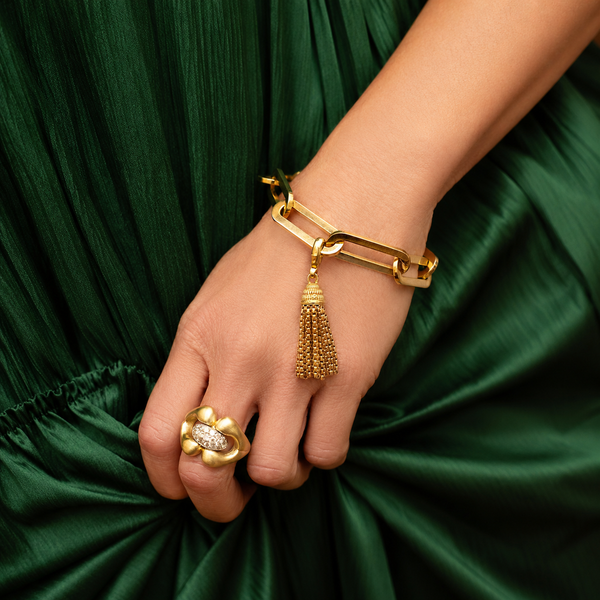
The jewelry is not presented simply as gold, diamonds and symbols. The brand explains the ideas behind the pieces and how they can be combined. The customer learns something while shopping.
That creates a stronger reason to buy than a beautiful photograph alone.
What to take from it: education can create desire. When customers understand why a piece matters, the price becomes easier to understand too.
Cult Gaia — one idea, everywhere
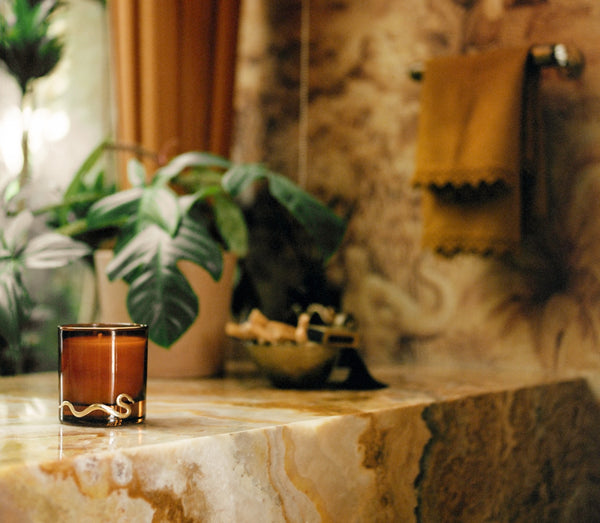
Cult Gaia has a very recognizable visual language. Sculptural objects, strong shapes, warm neutrals and photography that makes the product feel closer to art than traditional fashion ecommerce.
The important part is the consistency. The same idea follows the customer from the homepage to the product page.
What to take from it: you do not need hundreds of visual ideas. One strong idea, repeated well, can become the entire identity of a brand.

AFLALO — the challenger brand with a point of view
AFLALO is a useful example of where luxury is going next.
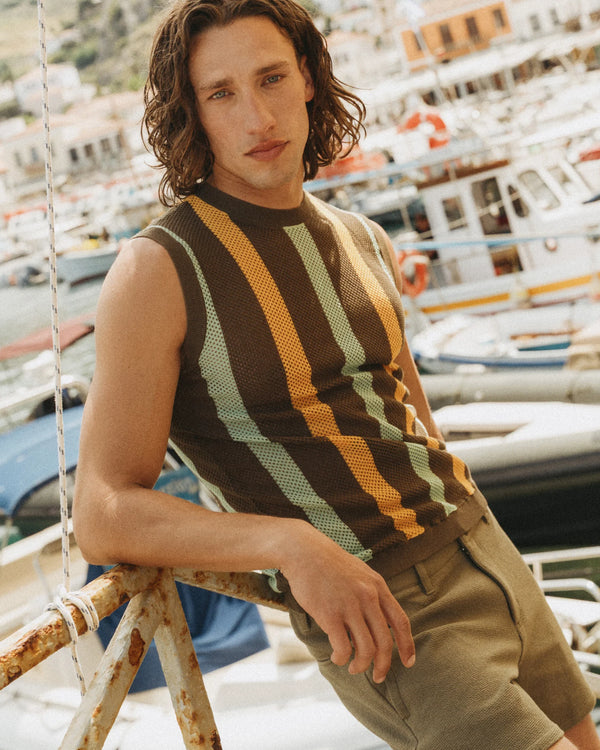
Founded by Yael Aflalo, who previously founded Reformation, the brand does not have the history of a traditional luxury house. Instead, it has a very specific point of view — modern clothes, strong materials and a tightly controlled visual world.
That is important because the luxury customer is changing. In the US, 68 percent of clients surveyed by The Business of Fashion said challenger luxury brands best represent their identity.
As the report puts it, customers are increasingly looking for brands that feel “personally meaningful” and reflect their “taste, values, aspirations or identity.”
What to take from it: you do not need 100 years of history to create a luxury brand. You need a clear reason for someone to care.
Phoebe Philo — restraint with a strong identity
Phoebe Philo's website is a good reminder that minimal does not have to mean cold.
The site gives the clothes space, but the overall experience still feels highly considered. The collections, films and photography create a sense of taste without over-explaining it.
There is a confidence in letting the customer discover the brand rather than telling them what to think.
What to take from it: the strongest luxury brands trust their audience. They do not fill every space with messaging.
STAUD — make the brand feel like a lifestyle
STAUD shows how a younger brand can build a recognizable world without relying on traditional luxury codes.
Its bags, clothing, color, collaborations and campaign imagery all feel part of the same universe. There is a sense of personality and optimism that carries through the shopping experience.
What to take from it: luxury does not have to feel formal. A strong point of view can be just as powerful as heritage.
Brunello Cucinelli — sell the philosophy, not just the product
Brunello Cucinelli has built one of the clearest examples of philosophy becoming part of the product.
Solomeo, craftsmanship, humanistic capitalism and the company's culture are not side stories. They are part of what the customer is buying.
At the highest end of the market, this matters. A customer is not only buying cashmere. They are buying into a way of seeing the world.
What to take from it: the story should not sit next to the product. It should make the product more valuable.
Net-a-Porter — make curation the product
Net-a-Porter proved that a multi-brand retailer could create its own luxury identity.
The brands are important, but so is the way they are edited, photographed and presented. Editorial content, merchandising and service work together.
What to take from it: if you cannot own every product, you can still own the taste around it.
What is actually changing in luxury?
The biggest shift is not visual. It is emotional.
The Business of Fashion's 2026 research found that emotional connection is the top driver of desirability in both the US and China. Heritage, craftsmanship and trends still matter, but they are no longer enough on their own.
One luxury client interviewed for the report put it simply: “Luxury once functioned as a status symbol for me. But now, I think it has become more of a vehicle for lifestyle and self-expression.”
That is a major change.
Customers want products that say something about who they are. They want things that feel distinctive, personal and worth choosing for themselves.
And that is one reason challenger brands are gaining ground.
In the US, 68 percent of surveyed clients said challenger luxury brands best represent their identity. Smaller brands can feel more personal, more culturally relevant and less predictable than the traditional luxury giants.
For emerging brands, this is an opportunity. You do not have to imitate a heritage house to look luxurious. You need to make your own world feel complete.
Quality still matters — but it is no longer the whole story
Craftsmanship remains important, especially when customers are deciding whether to pay full price.
In China, around 45 percent of clients say they are willing to pay full price for quality. Across both the US and China, roughly half of luxury shoppers say they will pay full price when they want something immediately.
But scarcity alone is not doing the work it once did.
Customers are increasingly paying full price because something feels unique, well made and desirable — not simply because they are afraid it will sell out.
The takeaway: quality gets you into the conversation. Desire gets the sale.
DTC is becoming the center of the luxury brand
The shift is also visible in how luxury companies are thinking about direct-to-consumer.
LVMH, Kering, Moncler Group, Prada Group and Ermenegildo Zegna Group have all reinforced the importance of owned retail, tighter distribution and direct relationships with customers.
At Ermenegildo Zegna Group, DTC represented 82 percent of brand revenues in 2025, up from 78 percent in 2024 and 73 percent in 2023.
Ermenegildo “Gildo” Zegna described the change clearly: “DTC has evolved from being one important channel to the central pillar of our business model and a key growth engine.”
His reason is equally important: DTC allows the company “to present each brand exactly as we want it to be experienced, from product assortment to store environment and storytelling.”
That is really the point of DTC for luxury. It is not simply about owning the transaction. It is about owning the experience around it.
Canada Goose — DTC as the place where the brand comes to life
Canada Goose offers another useful example.
Today, DTC represents more than 70 percent of its business. But Carrie Baker, the company's brand and commercial president, says they do not think of DTC simply as another sales channel.
“We think of it as the space where our brand comes to life most fully,” she says. “It’s where someone can step into our world.”
That idea is becoming increasingly important for luxury brands.
A website should not feel like a database of products. It should feel like the place where the brand is most completely expressed.
Canada Goose is also investing in the details around that relationship — new stories, newness in stores, clienteling and more personalized communication.
As Baker puts it, “Staying close to our clients is what sharpens that balance of emotion and discipline.”
What to take from it: DTC is not just ecommerce. It is the relationship between the brand and the customer.
The problem: beautiful websites are still losing customers
There is a catch.
Luxury brands are investing more in digital, but the path to purchase is not necessarily getting easier.
Discovery is fragmented across search, social media, editorial, resale and now AI. Customers may discover a product in one place, research it somewhere else and finally purchase it on the brand's website.
As Juan Pellerano of Swap Commerce puts it, “There’s still a conversion gap.” Consumers, he says, feel that it is getting harder to make purchase decisions compared with three years ago.
That means adding more features is not necessarily the answer.
Sometimes the answer is making the journey simpler.
Trust is becoming part of the shopping experience
Luxury purchases are rarely completely rational. People want reassurance before spending significant amounts of money.
Recent luxury research found that customers continue to rely heavily on trusted sources of advice and inspiration. Magazine and newspaper articles were the biggest source of discovery in the survey, followed by ecommerce sites and social media.
That tells us something important: luxury customers still want a reason to believe.
They want to understand the product. They want to know the brand. They want to see what other people say about it. And they want the buying experience to feel safe and considered.
This is especially important as AI becomes part of discovery.
AI is changing discovery — but the brand still needs to own the relationship
According to the research, 84 percent of luxury consumers use AI tools somewhere in their shopping journey.
Consumers are already using AI to search for products, compare prices, discover brands and narrow down purchase decisions.
But there is an important distinction: discovery can happen through AI, while trust still needs to happen through the brand.
One US consumer interviewed for the research explained it well: “I wouldn’t be comfortable completing transactions in ChatGPT, I would want to go to the website of the product itself.”
That makes the brand website more important, not less.
AI may introduce the customer to a brand. The website still needs to convince them.
So what should a luxury ecommerce site actually do?
It should do five things very well.
1. Create desire.
The customer should want the product before they start thinking about price.
2. Build an emotional connection.
The site should make the customer feel something about the brand — not simply understand what it sells.
3. Give the product a reason to exist.
Craftsmanship, design, meaning, culture or innovation should make the product feel worth choosing.
4. Make buying easy.
Luxury should not mean unnecessary friction. Shipping, returns, duties, availability and checkout should be clear.
5. Build the relationship beyond the transaction.
The website should work with email, clienteling, retail, editorial and social to create a relationship that continues after checkout.
The new rules of luxury ecommerce
The old model was relatively simple: make the product beautiful, create scarcity, build a prestigious image and distribute carefully.
The new model is more personal.
Make people feel something.
Give them a reason to believe in the brand.
Give them a reason to choose you over everyone else.
Make the journey easy once they decide.
And most importantly, give them a world they want to come back to.
The strongest luxury ecommerce sites are not necessarily the ones with the most technology, the most animation or the most features.
They are the ones where everything feels intentional.
The photography. The words. The product information. The navigation. The checkout. The packaging. The email after the purchase.
Every part of the experience should answer the same question:
Why should I want this brand in my life?
Frequently asked questions
What makes a luxury ecommerce website successful?
The strongest luxury ecommerce sites combine strong visual identity with a clear point of view, great product presentation, emotional storytelling and a simple path to purchase. The goal is not simply to make the site look expensive. It is to make the customer want to be part of the brand.
Do luxury brands need heritage to succeed?
No. Heritage is powerful, but it is not the only way to create desire. Challenger brands can build loyalty through strong design, cultural relevance, craftsmanship and a clear point of view. In the US, 68 percent of surveyed luxury clients said challenger brands best represent their identity.
Why is emotional connection important in luxury ecommerce?
Because luxury purchases are closely tied to identity and self-expression. Customers increasingly want products that feel personal and reflect their taste, lifestyle and values. Emotional connection ranked as the top driver of desirability in both the US and China in recent Business of Fashion research.
Does quality still matter in luxury?
Absolutely. Quality and craftsmanship remain major reasons customers are willing to pay full price. But quality is increasingly the baseline. The brands that stand out combine quality with a stronger emotional or cultural reason to buy.
Why is DTC becoming more important for luxury brands?
DTC gives brands greater control over how they present themselves, how they merchandise products and how they build relationships with customers. It also gives brands direct access to customer behavior and feedback. For luxury, that control is becoming increasingly valuable.
Will AI replace luxury ecommerce websites?
No. AI is becoming an important part of discovery, but luxury customers still want to visit the brand itself before making many purchases. The opportunity is for brands to make their websites better sources of information, inspiration, trust and conversion as AI becomes another gateway into the customer journey.
What is the biggest mistake luxury brands make online?
Trying to add more instead of making the experience better. More features, more content and more technology do not automatically create a better luxury experience. The strongest sites are usually highly edited, easy to navigate and very clear about what makes the brand special.
Exhibea builds luxury ecommerce experiences for fashion, jewelry, lifestyle and premium consumer brands. We bring together brand, design, Shopify development and ecommerce strategy to create digital experiences that build desire and drive growth.